Slovenia Joined PICASSO and MARI; Hungary is expected to join both platforms in October this year
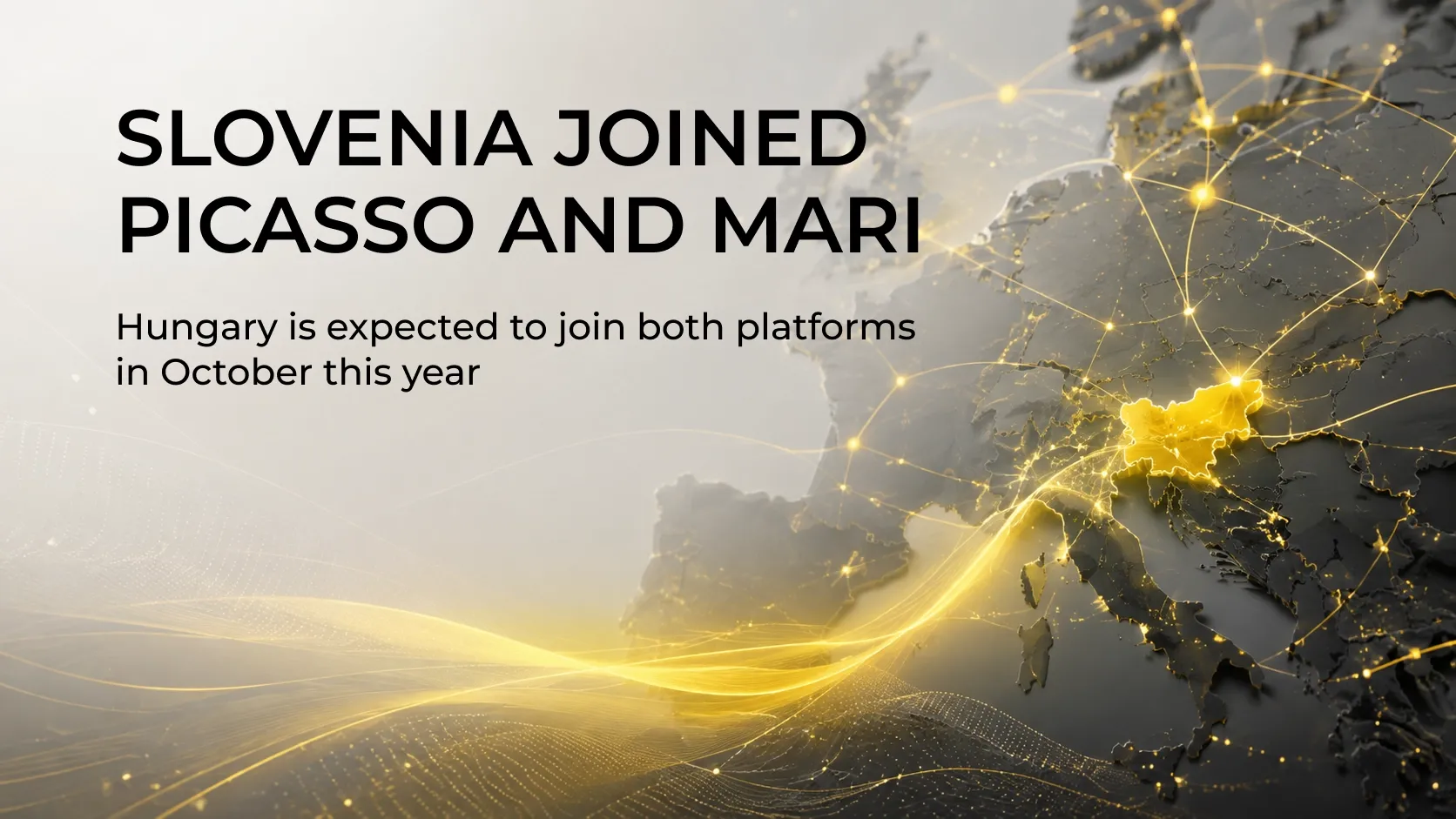
Slovenia's transmission system operator ELES connected to the European PICASSO balancing platform on 1 July 2026 and joined MARI on 15 July 2026. Hungary's TSO MAVIR is preparing to join both platforms in October 2026.
What PICASSO and MARI are
PICASSO is the European platform for the cross-border exchange of balancing energy from automatic frequency restoration reserves (aFRR). It runs optimisation cycles close to real time and activates reserves automatically across participating control areas. MARI performs the same function for manually activated frequency restoration reserves (mFRR), which TSOs call on for manual frequency restoration and balancing-energy activation. Both platforms went live in 2022 and support the integration of European balancing markets.
Slovenia: two go-lives in two weeks
ELES connected to PICASSO on 1 July 2026, enabling cross-border exchange of balancing energy from automatic frequency restoration reserves. The MARI connection on 15 July 2026 completes Slovenia's entry into the EU balancing platforms. ELES gains access to a wider pool of balancing bids for its own system needs.
Hungary: both platforms in October
MAVIR is preparing Hungary’s accession to PICASSO and MARI in October 2026. The go-live follows regulatory amendments approved by MEKH to the relevant balancing-service terms and conditions, covering business-process and technical changes related to connection to the MARI and PICASSO platforms.
Balancing in Hungary has operated as a largely national market. After connection, Hungarian balancing processes are expected to become more integrated with the European balancing platforms, increasing exposure to cross-border competition over time.
What earlier accessions showed
Markets that joined PICASSO in previous waves have, in some cases, experienced changes in balancing price formation and higher volatility after connection. For example, Poland’s post-accession experience has been reported as involving sharp balancing-price movements. The pattern across the joined markets points to a transition period. Local reserves may start competing with cross-border bids, price formation adjusts, and volatility may change as cross-border liquidity develops.
What it means for the market
First, balancing price exposure changes. Also, the value of flexibility may increase. Cross-border activation widens the market for assets that can respond within aFRR and mFRR timeframes, including batteries, hydro and flexible thermal units. The regional map keeps filling in. The balancing markets of Central and South-Eastern Europe are moving towards greater integration with European balancing platforms. Each accession can add bids to the shared pool and strengthen the link between national balancing prices and the wider European market. However, lower balancing-energy prices do not automatically mean lower total balancing costs, as overall costs also depend on system conditions and other balancing factors.
Key questions on Slovenia and Hungary joining PICASSO and MARI
What is the difference between PICASSO and MARI?
PICASSO exchanges balancing energy from automatic frequency restoration reserves (aFRR) with near real-time automated activation. MARI exchanges balancing energy from manually activated frequency restoration reserves (mFRR), which TSOs activate manually when additional balancing energy is needed.
What are aFRR, mFRR and FCR?
FCR is the frequency containment reserve, the first automatic response to a frequency deviation. aFRR is the automatic frequency restoration reserve, activated within minutes to restore system frequency. mFRR is the manually activated frequency restoration reserve, typically used for larger or more sustained imbalances.
How did balancing prices behave in other markets after joining PICASSO?
Several markets have experienced changes in balancing price formation and, in some cases, higher volatility after connection. For example, Poland’s post-accession experience has been reported as involving sharp balancing-price movements.
Source
ENTSO-E, Manually Activated Reserves Initiative (MARI) project page:https://www.entsoe.eu/network_codes/eb/mari/
ENTSO-E, PICASSO project page: https://www.entsoe.eu/network_codes/eb/picasso/
Disclaimer
This article is prepared by D.TRADING for general informational purposes only and does not constitute legal, financial, investment, accounting, tax, or regulatory advice. The information contained herein is based on publicly available sources and reflects opinion on the regulatory environment as of the publication date. D.TRADING makes no representations or warranties, express or implied, as to the accuracy, completeness, or timeliness of the information provided. This document is not an offer or solicitation to buy or sell any energy products, commodities, or financial instruments.
About D.TRADING
D.TRADING is a B2B energy trading company operating across Central, Eastern, and South-Eastern Europe, with hubs in Baar (Switzerland), Zagreb (Croatia), Amsterdam (Netherlands), and Kyiv (Ukraine).
The company trades power, gas, LNG, and fuels for enterprise and wholesale counterparties, with services that include structured trading, renewable offtake, battery storage route-to-market, and guarantees of origin.


