
Bloomberg: Europe Risks Entering Winter with Below-Normal Gas Inventories
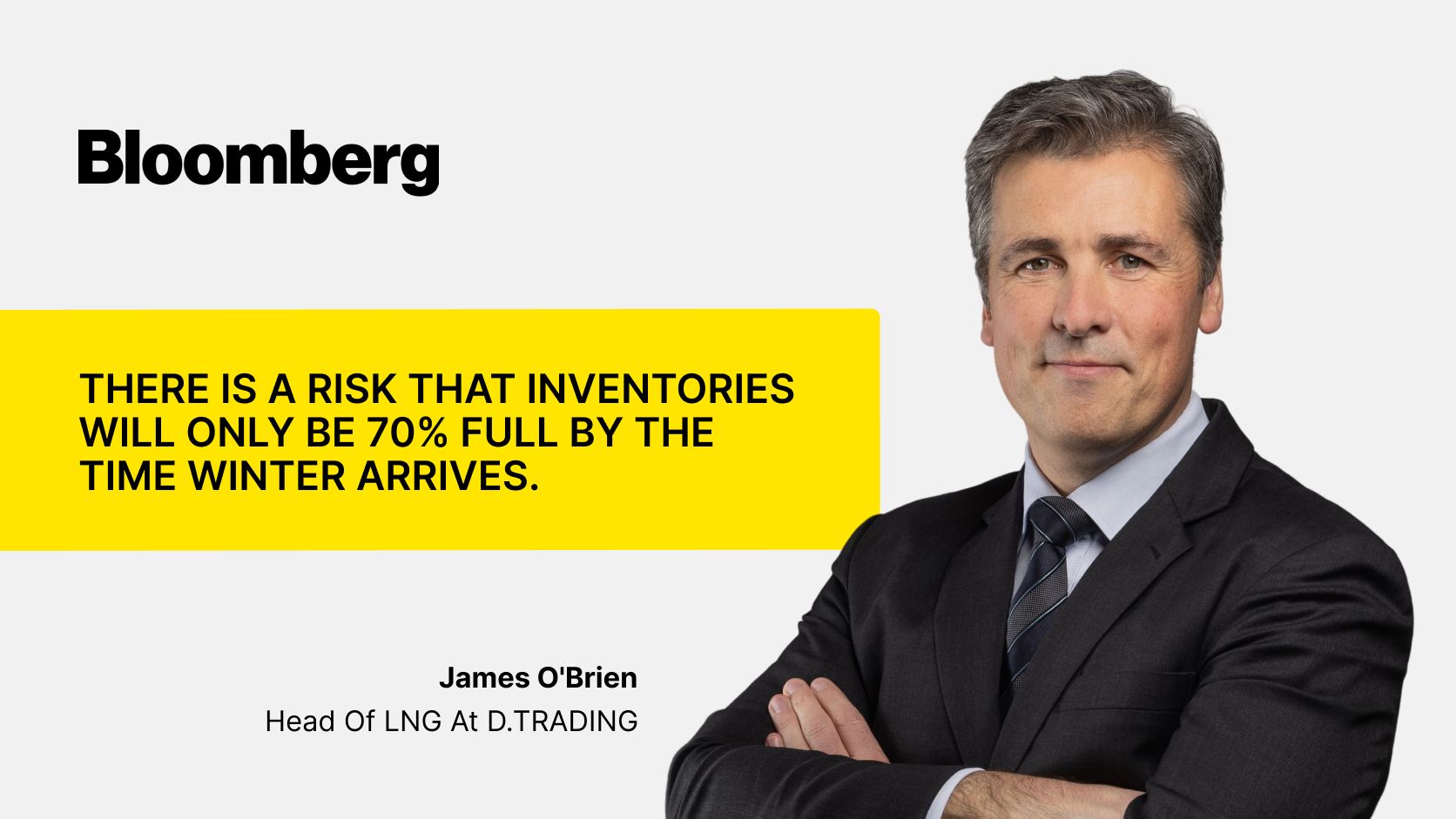
European natural gas prices have retreated following signs of a potential de-escalation between the United States and Iran, but the decline has done little to improve the economics of gas storage ahead of winter, D.TRADING Head of LNG told Bloomberg.
While benchmark front-month gas prices have fallen by around 10% since the beginning of the week, concerns over global LNG supply, rising Asian demand and continued uncertainty surrounding the Strait of Hormuz are expected to keep European gas markets structurally tight in the months ahead.
Speaking to Bloomberg, James O’Brien, Head of LNG at D.TRADING, said that despite the recent correction in prices, underlying market fundamentals remain challenging.
Europe continues to rely heavily on LNG imports to replenish gas inventories ahead of the heating season. However, the traditional incentive to inject gas into storage during summer and sell it during winter remains limited as winter contracts have fallen alongside prompt prices, reducing opportunities for profitable seasonal spreads.
At the same time, stronger LNG demand from Asia during what is expected to be an exceptionally hot summer could intensify competition for cargoes and force Europe to maintain a premium to attract supply.
O’Brien noted that the market still faces significant challenges in rebuilding inventories ahead of winter.
European gas storage facilities are a cornerstone of the region’s energy security, with inventories capable of covering roughly one-third of winter demand. Yet storage levels remain below historical norms, leaving the market vulnerable to supply disruptions, severe weather conditions or renewed geopolitical tensions.
According to O’Brien, there is a growing risk that storage sites may enter the heating season at levels well below historical averages.
As Europe prepares for winter, storage levels, LNG procurement strategies and developments across global LNG trade routes will remain key factors shaping market dynamics and regional energy security.


