D.TRADING at SEEGAS Vienna: The Urgent Cost of Non-Integration in Europe’s Gas Markets
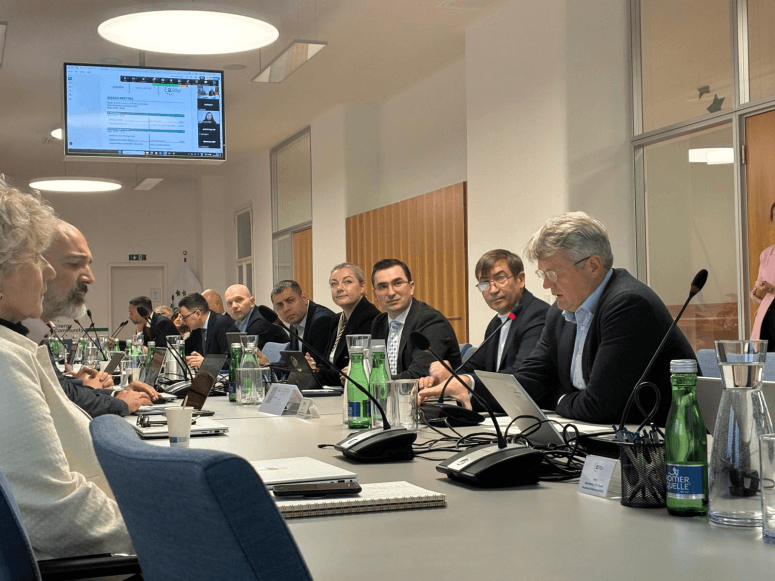
At SEEGAS meeting on December 3, regional regulators, TSOs and market participants convened in Vienna to address rising winter demand, tightening supply dynamics, and continued disruption across Ukraine’s energy system. D.TRADING’s Head of Gas Desk EU, Fabio Fiorini, delivered a keynote speech warning that Europe is already paying a high price for fragmented gas markets.
Ukraine requires up to 4 bcm of imported gas this winter, - equivalent to 40 LNG cargoes. In an integrated market, these volumes could flow competitively from any EU terminal. Today, fragmented rules make every cargo costlier and every transit slower.
This year, D.TRADING delivered Ukraine’s first-ever FOB U.S. LNG cargo via the Northern LNG Corridor, from Plaquemines (Louisiana) to the Klaipėda LNG Terminal, then onward to Ukraine through Poland. The company also became the first user of the Southern Route 1 through Greece.
Both corridors proved operational, scalable, and strategically important, yet still underused.
Integrated markets lower costs by enabling competition, dynamic routing, better infrastructure utilization, faster response to crises, and more efficient balancing. With Ukraine’s production heavily damaged by ongoing attacks, integration is no longer optional, it is essential for regional resilience.
F.Fiorini also pointed out the role of traders, calling them not intermediaries but those who operate and balance the system, create liquidity, hedge risk and move molecules where they are needed the most.
Head of Gas Desk EU at D.TRADING also called for a CESEE market where LNG from global suppliers can reach any customer through any corridor without artificial barriers, a system that is competitive, flexible, and resilient.


